
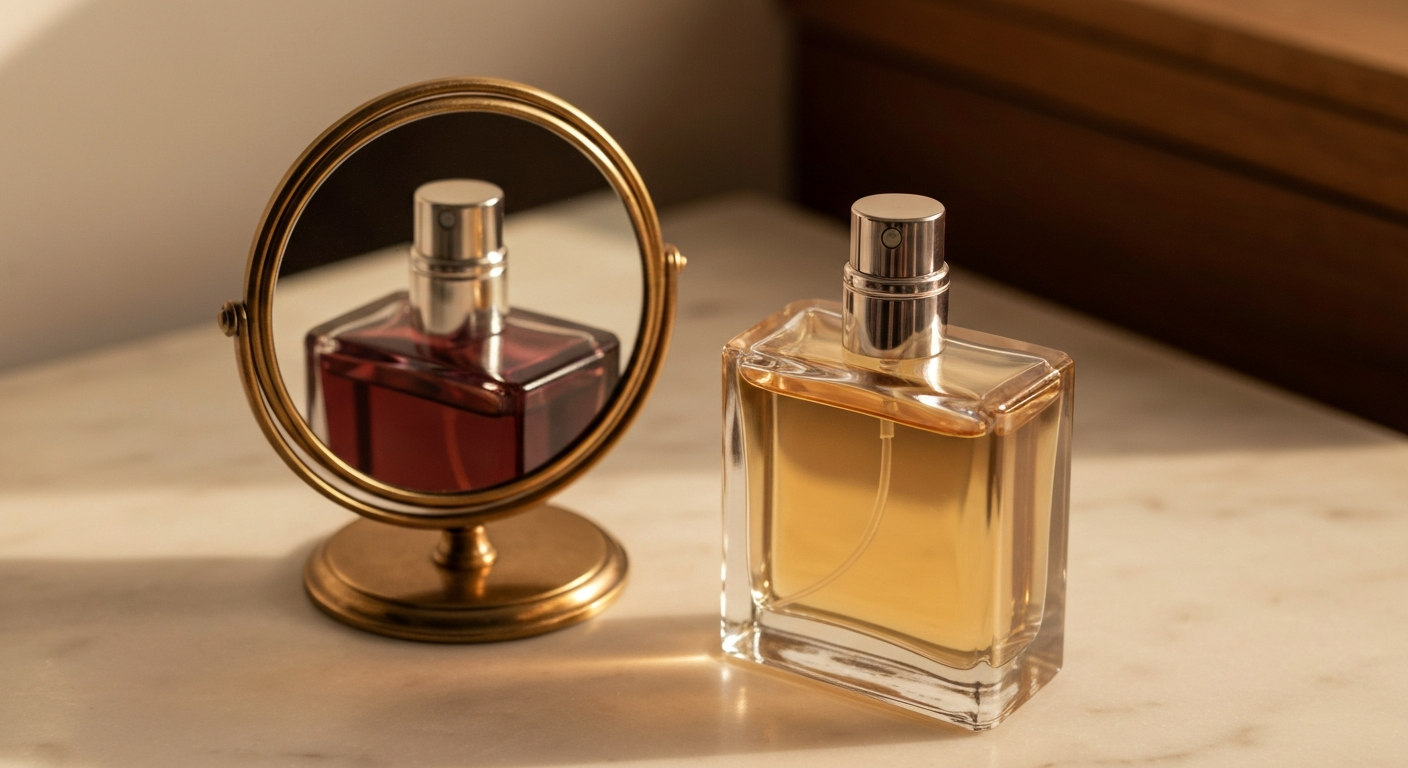
Most pheromone-cologne reviews argue about one thing. Do the molecules work on other people? That fight has been running for thirty years, mostly because the field is badly under-funded. The honest answer is yes, in the right dose and context, through a pathway the dismissive takes keep ignoring. Meanwhile nobody talks about the other real lever. That lever is what wearing the bottle does to you. Not metaphysically. Behaviorally. Your posture, your eye contact, the half-second you wait before answering instead of rushing.
This is the meta article for the rest of our coverage. Once you understand how the two layers stack, the best pheromone cologne picks make a lot more sense. So does why we never promise magic and never write the chemistry off either.
The honest mechanism stack
A pheromone cologne is doing three things at once. All three are real. They just work on different timescales.
Layer one: the active molecule
Think compounds like androstadienone , androstenone, copulins. The formal lab literature is thin, because almost nobody funds this work. What does exist shows small real effects on mood and attention in controlled rooms. The signal is genuine but subtle. Overdose it or expect it to shout over a noisy bar, and you get the letdown the marketing sets people up for. Dosed right, it does its job under the radar.
Layer two: the carrier fragrance
Almost every pheromone cologne is also a regular fragrance. Usually a clean musk, amber, or aquatic accord. This part works exactly the way any cologne works. People stand closer to you when you smell good. That is a hundred years of cosmetics-industry data, not a contested claim.
Layer three: the wearer's confidence change
You put on a bottle you believe gives you an edge. You walk out of the bathroom slightly different. Almost nobody measures this layer. It is real, and it lands the second you spray. It is also the one layer the product cannot fake for you. It runs on top of the chemistry, not instead of it. The two are not rivals. They compound.
Why the confidence layer matters as much as the molecule
The cosmetics industry figured out the confidence half fifty years ago. It built an entire economy on it. Lipstick studies in the 1980s found women rated themselves more attractive after applying makeup, even with no observers present. Suit studies show men negotiate harder in formalwear. Posture studies show people who stand taller report more confidence within ninety seconds. None of this is novel. A pheromone cologne pulls that same lever and adds a chemical one on top of it.
When you feel like you have an edge, three things shift. The people around you read all three within seconds.
- Eye contact lengthens by a fraction of a second. That fraction is the whole difference between interested and available.
- Your voice drops slightly in pitch and slows down. Both correlate with perceived status across basically every culture studied.
- Filler words drop. You stop apologizing for taking up airtime. When the shift is small, people read that as competence, not arrogance.
The people you want to attract pick up on those signals. They are also, whether they clock it or not, picking up the molecule at close range. The behavior opens the door. The chemistry works in the background while it is open. You do not have to choose which one to believe in.
Is it 'just placebo'?
No, and this is the move skeptics get wrong. 'It's just placebo' gets treated like a refutation. It isn't, on two counts. First, placebo is not fake: a cognitive expectation produces real downstream changes in behavior and outcomes. The cause is internal, the effect is not imaginary. Second, the chemistry is doing its own separate work at the same time. Confidence and chemosignal stack. It was never either/or.
The confidence half works the way a well-fitting suit works. Or a fresh haircut the morning of an interview. It changes how you carry yourself, and that change gets read. But that is only half the bottle. The molecule keeps signaling whether or not you thought about it. Our placebo effect and pheromones piece goes deeper. Worth reading if 'just placebo' still feels like the whole story.
The Saxton 2008 and Hare 2017 framing
Two papers get cited a lot. Saxton et al. (2008) ran a speed-dating study. Men wearing androstadienone got higher attractiveness ratings from women than controls. Small effect, real signal, single study. Hare et al. (2017) ran a much larger test of androstadienone and estratetraenol and did not reproduce the basic claim. Read fairly, that pair does not disprove anything. It tells you the human chemosignal work is thin and under-powered, which is what happens when almost no one funds it.
Notice what neither paper tested. The wearer. Both designs measured whether observers responded to a sprayed compound. Neither asked whether the sprayed men also walked in with their shoulders back. That confound is real, and it points to the same conclusion as the rest of the file: the two effects travel together and nobody has cleanly separated them yet. The full case, hype and chemistry both, lives in our do pheromone perfumes work piece.
One thing has never been seriously contested. The effect of wearing a product you believe in. That one is so well-established it isn't even a research question anymore. It's the assumption behind cosmetics, fashion, and most of the wellness industry. The chemistry is the part still waiting for the funding to catch up to what the field reports already show.
What this means for buying
Don't buy pheromone cologne expecting magic. The magic framing is what causes returns and bad reviews. Someone sprays it once before a Friday night, expects a switch to flip, and nothing supernatural happens. They conclude they got scammed and leave a one-star. That is a dosing and expectation problem, not proof the chemistry is empty.
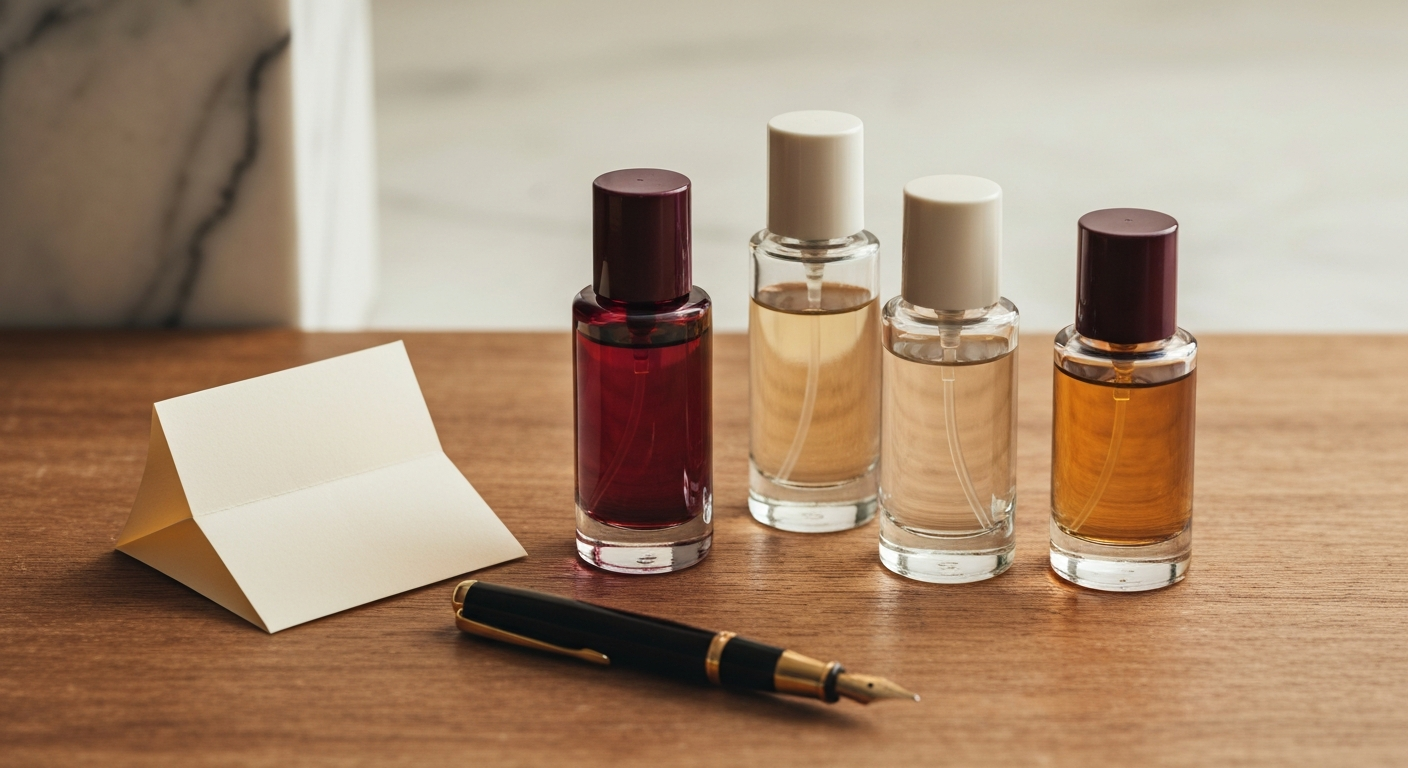
Do buy it as a stack that compounds. The molecular signal, the carrier fragrance, and the behavioral shift in you all work at once. Any one of them alone is marginal. Together they're a meaningfully different version of you walking into the room, sending a different signal before you speak. That is the actual product. Once you see that, the price stops looking absurd. It starts looking like what most grooming products cost.
We may earn a commission if you buy through the links below. Picks are chosen for fit with the stack, not pay-to-play.
Picks that fit the stack
Pure Instinct — the easy first ritual
Pure Instinct is the bottle I recommend to anyone trying this for the first time. The price is low enough that you don't second-guess the spend. That matters more than it sounds. Buyer's remorse is the fastest way to poison the confidence layer before the chemistry gets a fair run. The scent is a warm vanilla-amber that reads as clean and approachable on most skin. You spray it, you smell good, the ritual is built in. No magic promised, and that's the point.
Liquid Trust — confidence over attraction, explicitly
Liquid Trust is the interesting case for this article. It's marketed around oxytocin rather than attraction pheromones. The oxytocin sprays mechanism is, charitably, weaker than the brand suggests. Oxytocin doesn't cross the blood-brain barrier well at topical doses. But the effect users report lines up with the confidence layer. They say they feel calmer in social situations, less guarded. That is exactly what you'd expect from a product that primes confidence. The framing in the marketing matches the framing in your head. That congruence is itself part of the mechanism.
Pherazone Ultra — the premium tier as part of the stack
Pherazone Ultra sits at the top of the price range. The higher spend feeds the confidence layer on its own. 'I bought the strongest one' is a thought that changes how you carry yourself before the first spray hits skin. The molecular content is also genuinely higher than most competitors, so layer one does more real work too. Already tried a cheaper bottle and felt nothing? This is the upgrade with enough active material to give the chemistry a fair test.
How to maximize the stack
Use one product consistently for thirty days before you decide whether it works. This is the rule almost nobody follows and the one that matters most. The ritual needs to become automatic before the behavioral shift does, and the chemistry needs repeat exposure to show a pattern. The first three or four wears are noisy. You're paying attention to the bottle, the scent, whether the cap clicks, whether your wrist smells right. None of that is the effect you're trying to measure.
Around day ten the spray stops feeling like an event. It starts feeling like part of getting dressed. That's when the layered effect begins to compound. By day thirty you'll have a reasonable sample of social interactions to judge from. And you'll be judging the version of you that's worn it long enough to forget about it. That's the data point that matters.
A few smaller stack tips. Spray on pulse points where heat lifts the molecules: neck, wrists, base of throat. Avoid spraying directly onto clothing for pheromone formulas. Skin contact matters for the active compounds and the carrier oils. And don't layer with another strong cologne the first month. You want to tell what this bottle is actually doing.
What the stack doesn't fix
Worth being blunt here so the framing doesn't oversell. No bottle fixes mismatched intent. Say you're at a wine bar looking for a relationship. She's there for one drink with a friend before catching a flight. No cologne on the shelf is closing that gap.
It won't fix bad communication either. The half-second of extra eye contact buys you the chance to start a conversation. What comes out of your mouth in that conversation is on you. The cologne does not write your sentences.
And it won't fix fundamental incompatibility. People who would otherwise have walked away politely still will. Just maybe two minutes later. That extra two minutes is meaningful in aggregate over a year of dating. It is not meaningful with someone who was always going to be a no.
FAQ
If confidence is part of it, why not just skip the bottle?
Because the bottle is the trigger, and it's also the only way to get the molecule. Confidence on demand is hard. Confidence triggered by a small consistent ritual is easy, and the chemistry rides along for free. Most of the wellness industry is built on that first asymmetry. The cologne is a $30-80 commitment device that wires in the ritual and delivers the active compounds in the same spray.
Does the brand matter, or is any pheromone cologne equivalent?
The brand matters for three reasons. The carrier scent has to be one you actually like wearing daily. The price has to feel right enough that you stop second-guessing it. And the active content has to be high enough to do real work, which is where the junk bottles fail. The fit-to-you matters most, but a pheromone sticker on watered-down body spray is still a scam. Our best pheromone perfumes for men roundup is built around this.
Will I know it's working?
Not directly, and it's worth setting expectations there. You won't feel chemical. The molecule works below conscious notice, on you and on the people near you. Over a few weeks, in aggregate, you'll see more interactions go slightly better than baseline. That is the actual signal. Anyone selling you a felt-in-the-body high is selling you a story.
What if I'm already a confident person?
Then layer three contributes less for you. The molecular and carrier-scent layers do proportionally more of the work, and they don't need your belief to run. You'll probably still notice a marginal effect. You're just closer to the ceiling than someone who needed the lift in the first place. That's a fair trade. You also had less of a gap to close.
Buy the bottle because you want a stack that compounds three real, small things into one meaningfully different version of you. That's the honest pitch. It's the only one that holds up after thirty days.


No comments yet