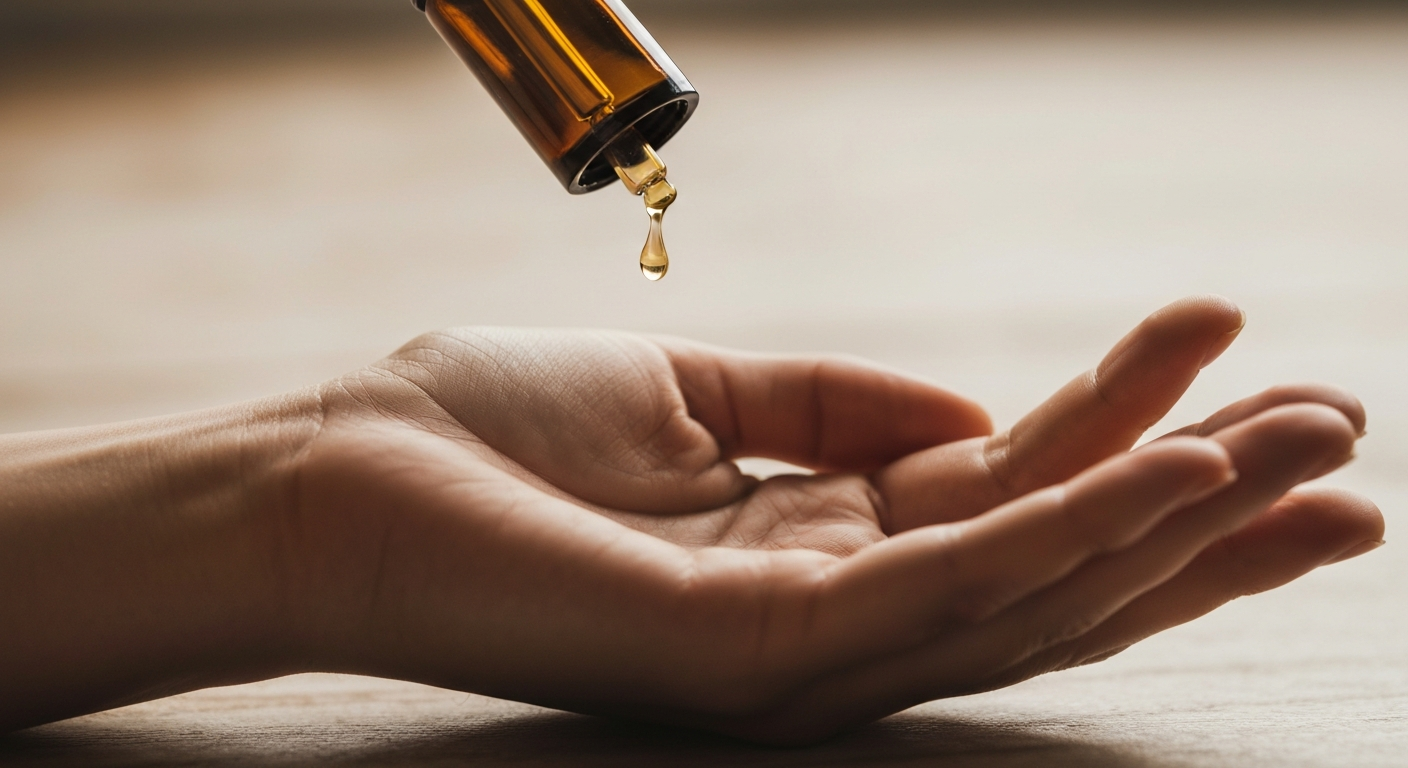
Pheromone oils are unforgiving about application. Use too much and the androstenone goes bitter inside an hour. Apply over deodorant and the molecules sit on a wax layer instead of bonding to your skin. Rub your wrists together and you bruise the top notes of whatever you layered on top. None of this is in the leaflet that ships with the bottle. So here is the actual routine: pulse points, quantities, timing, and the mistakes that quietly ruin it.
Clean skin first
Pheromone oil binds to warm, clean skin. Anything on the surface changes how it behaves. Moisturizer, sunscreen, leftover deodorant, body oil from yesterday: all of it shifts how the carrier oil spreads and how the active molecules release. The cleanest application is straight out of a warm shower. Towel-dry, then apply within a couple of minutes while the skin is still slightly warm.
Can't shower because you're at the office or heading out from a coffee shop? The fix is a warm, damp washcloth. Press it against each pulse point for ten seconds. That lifts the residue, warms the skin, and gives the oil a fair shot. Cold skin is the second-most-common failure mode, right behind using too much.
Pulse points (and why they matter)
Pulse points are the spots where major arteries run close to the surface. Blood-warm skin acts as a tiny diffuser. It gently volatilises the oil through the day instead of letting it sit there flat. You don't need all of them. Two or three is plenty. Pick from this list:
- Sides of the neck, just under the jaw, where the carotid runs. This is the highest-output point on the body.
- Inner wrists, on the soft side, where you'd take a pulse.
- Behind the ears, in the little hollow at the base of the lobe.
- Centre of the chest, roughly over the sternum. It sits under your shirt and warms with body heat through the day.
For women, the décolletage adds a third diffusion zone. That's the upper chest near the collarbone. It pairs well with copulin-based blends because it sits closest to a conversation partner's face. See the copulins profile for the molecule details. For men, the jawline edge holds androstenone nicely. That's the spot you'd shave under the chin. It projects into close-talking range without smelling like you bathed in it.
Quantity — less than you think
One drop, or one small dab, per pulse point. That's it. Apply to three points and you've used three drops total. Overdosing is the most common mistake by a wide margin. People assume more oil means more signal. The opposite is true.
Heavy androstenone-based oils go bitter and slightly metallic when there's too much on the skin. Copulin blends go cheesy. That's a sharp, sour-dairy edge anyone within two feet reads as wrong, even if they can't name it. The molecules don't get more attractive when you stack them. They hit a threshold and tip into off-notes. Restraint is the whole game.
Can't smell anything from a single drop? The answer isn't a second drop. Pheromone oils sit deliberately low and close. You're not supposed to smell yourself by mid-morning. See do pheromone perfumes work for what's normal.
The 60-second absorb rule
After applying, wait at least sixty seconds. Closer to two minutes is better. Don't put clothes on, spray cologne, or touch the skin before then. The oil needs that window to bond into the top layer of the stratum corneum. Cover it too soon and a chunk of the dose ends up on your shirt collar. That's wasted product. It's also why your pheromone oil seems to vanish by lunchtime.
The easiest way to build the habit: apply the oil before you get dressed. Brush your teeth in the meantime. Then put your shirt on after. The window happens automatically.
Layering with your cologne or perfume
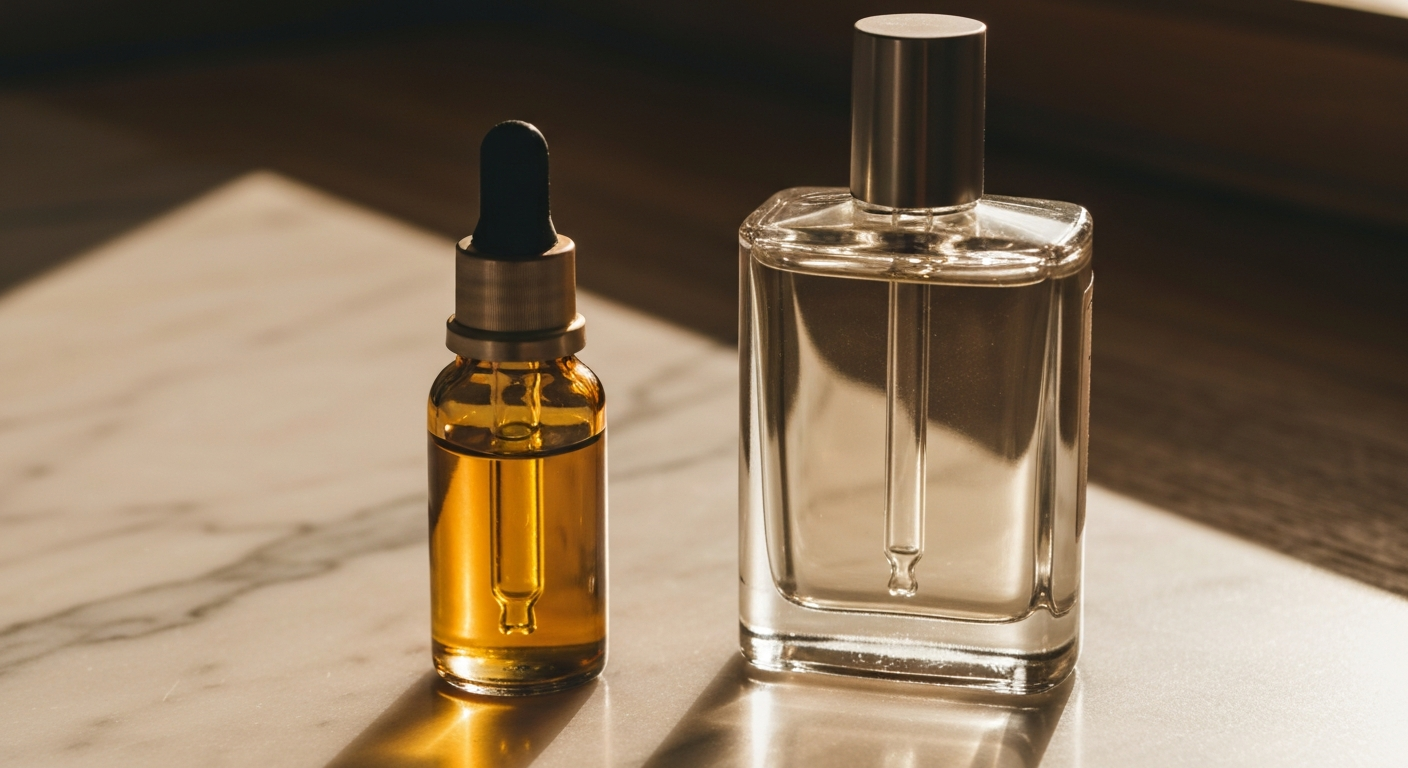
Pheromone oil goes on first, fragrance second. Always that order. The oil needs direct skin contact to bond and diffuse. Spray cologne first and you put an alcohol-and-aromatic layer between the oil and your skin. You'll get neither effect properly.
Once the oil has had its sixty seconds, spray your cologne from about six inches away. That's far enough for the mist to land as a fine layer rather than a wet patch. A wet spray re-dissolves the oil underneath and disturbs the bond. The full pairing logic is in layering pheromone cologne with fragrance , including which fragrance families clash with which molecules. See also the broader pheromone perfume layering tips .
Reapplication
A morning application usually holds usable signal for four to six hours on most skin. Heading from work straight into a long evening of dinner, drinks, or an event? A single fresh dab extends it another four hours. The rule is one pulse point only, not all of them. And never the same point you used in the morning. Pick a fresh spot, one drop, done.
Stacking a full second application on top of the first is how people end up smelling sharp at 9pm. The morning oil is still working. You need a small top-up, not a reset.
Common mistakes
- Using too much. Three drops is enough for the day. Six is too many.
- Applying over deodorant or moisturizer. The oil sits on the wax layer instead of bonding to skin.
- Rubbing wrists together. It mechanically bruises the molecules and shortens the diffusion curve. Press, don't rub.
- Applying right before leaving the house. With no absorb time, half the dose ends up on your shirt collar.
- Switching oils mid-day. A copulin blend over an androstenone-heavy morning oil can clash. The molecules read as conflicting signals and the scent goes muddy. Pick one and stick with it for the day.
- Storing the bottle in a hot bathroom. Heat and light shorten shelf life. See pheromone oil shelf life for storage rules.
Specific oil application tips
Application style varies by format. The top picks on the best pheromone oils page split into three rough categories: roll-on, vial-with-dropper, and spray oil. Each one wants slightly different handling.
Roll-on oils
RawChemistry and most drugstore-grade roll-ons apply easily. One slow pass over each pulse point lays down roughly a single drop's worth. Don't go back over the same spot. The ball saturates and you double the dose without realising. One pass, move on.
Vial oils with a dropper or open neck
Athena ships as a small vial with no applicator. You measure two or three drops onto a clean fingertip, then dab onto each pulse point. The fingertip gives more control than tipping the vial against the skin, which always dumps too much. Wash your finger after. Pheromone oil on a fingertip you then touch your face with is a separate problem.
Spray oils
Liquid Trust and the few other spray-format oils get treated like a very light cologne spray. One short pulse from about four inches, aimed at one or two pulse points rather than the air. Don't spray into the air and walk through it. Almost all the active material ends up on the floor. Spray oils dose differently from rolled oils, which matters if you're comparing formats. That's covered in pheromone oil vs spray .
FAQ
How many pulse points should I actually use?
Two or three is the sweet spot for daily wear. Five only makes sense at a long event, if you started clean that morning and are using a low-concentration oil.
Can I apply pheromone oil to my clothes instead of my skin?
No. The active molecules need skin-temperature warmth to diffuse properly, and most pheromone oils stain fabric. Clothes also don't bond the oil. It flakes off as the day goes on.
Why does mine smell strong for an hour and then disappear?
Two likely causes. Either you applied too much, so your nose adapted and stopped registering it while others still smell it fine. Or you skipped the absorb time and most of it transferred to your shirt.
Should I apply before or after my regular cologne?
Before. Oil to clean skin, sixty seconds to absorb, then cologne sprayed over the top from six inches.
Is it safe to apply to the face?
Skip the face. Pheromone oils are formulated for body skin. Neck and jawline edge are as close as you want to get. Facial skin is thinner and more reactive, and the carrier oils aren't tested for that use.
No comments yet